GRP vs Gypsum vs Foam vs Polyurethane: Which Should You Choose?
3 min readLast updated:
A practical comparison of the most common decorative materials: weight, durability, moisture, installation and painting, with a table to help you choose the right one.
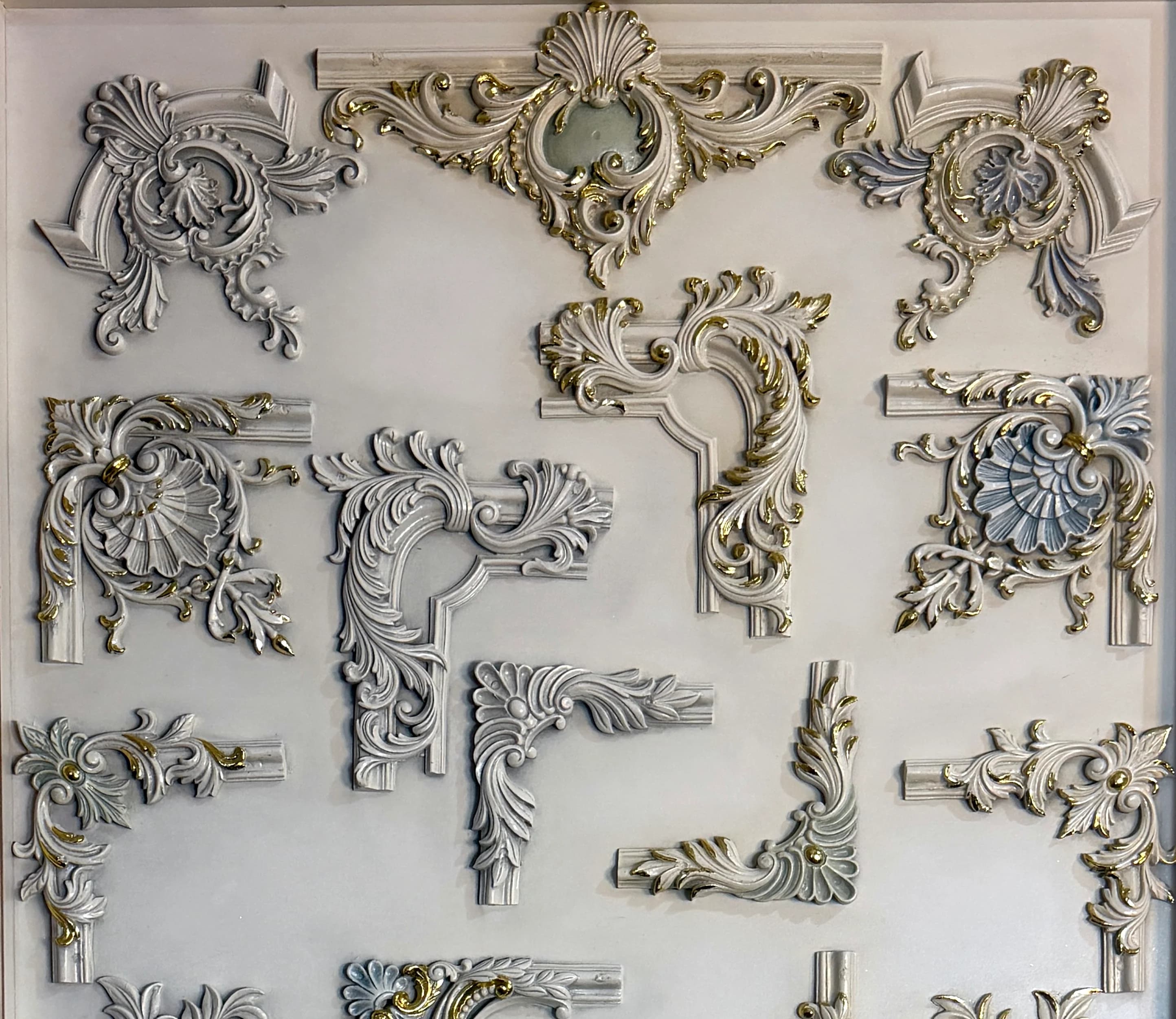
Short answer: no material suits every job. Gypsum suits work shaped on site, foam is the cheapest but the least durable, polyurethane is light and crisp in detail, and GRP combines rigidity, relatively low weight and stable shape, which suits classic ornaments such as panel corners and ceiling roses.
A quick look at each material
Gypsum
A traditional material for ceilings and cornices. It can be cast or shaped on site, which is its biggest advantage when you need a custom, non-standard size. On the downside it is relatively heavy and brittle, can crack with vibration or movement, is affected by moisture and leaks, and needs a skilled craftsman plus joint filling and sanding before painting.
Foam (polystyrene)
Very light and easy to cut with a knife, and usually the cheapest option, so it is common in budget work. It is soft, marks easily, and its detail is less crisp. Solvent-based paints can damage some types, so use water-based paint and test on a small piece first.
Polyurethane (PU)
A light material that keeps fine detail, tolerates moisture better than gypsum, and is easy to cut and fix with adhesive filler. It costs more than foam and is often used for light linear moldings, mostly indoors.
Glass-reinforced polyester (GRP)
This is the material most of our products are made of. It is formed in molds, giving crisp relief and a hard surface, and the thin shell makes it much lighter than solid gypsum. It tolerates moisture better than gypsum and does not crack easily when installed properly. According to our product descriptions it is odourless, accepts any type of paint (plastic, glaze or tebtin) and is fixed with a wall plug and screw, or silicone on some designs. Some pieces are marked interior decor only, so check the description before ordering.
Comparison table
This table is a general guide, not a price list, and results vary with manufacturing quality and installation.
| Property | GRP | Gypsum | Foam | Polyurethane |
|---|---|---|---|---|
| Weight | Relatively light (thin shell) | Heaviest | Lightest | Light |
| Rigidity and durability | Rigid, lasts well | Brittle, cracks with movement | Soft, marks easily | Durable with slight flex |
| Moisture | Better than gypsum | Affected | Absorbs little | Tolerates well |
| Detail | High, from the mold | High, depends on finishing | Less crisp | High |
| Installation | Plug and screw or silicone | Gypsum paste, needs a craftsman | Easiest, glue and small pins | Adhesive filler |
| Painting | Any paint type | After filling and sanding | Water-based preferred | After surface prep |
| Cost (relative) | Medium to high | Depends on labour and size | Usually lowest | Medium |
| Best for | Panel corners, roses, crowns, wall panels | Custom on-site designs | Budget, light work | Light moldings, fine detail |
How to choose
- Ready-made classic relief that lasts: choose GRP.
- A one-off custom design built on site: gypsum with an experienced craftsman.
- Tight budget and light, low-impact work: foam with water-based paint.
- Light moldings with fine detail: polyurethane.
- Worried about moisture: avoid gypsum and read the usage notes in each product description.
Materials can be combined. Many of our panel corner descriptions say they accept Futec or GRP moldings in 2 or 4 cm, so you can fix GRP corners and join them with light moldings. Browse panel corners, ceiling roses and wall panels, use the quantity calculator, then read how to install panel corners.
Frequently asked questions
Is GRP better than gypsum?
Not in every case. GRP is lighter, less prone to cracking and comes ready-made with crisp relief, while gypsum wins when you need a custom design shaped on site. Choose by type of work and budget.
Is GRP affected by moisture?
It tolerates moisture better than gypsum thanks to the nature of the material. Still, some pieces are described as interior decor only, so check each product description and use it indoors.
Do I paint GRP the same way as gypsum?
It accepts any type of paint, such as plastic, glaze and tebtin, but it does not need the same preparation as raw gypsum. Read our GRP painting guide for details.
Is foam a good choice?
It suits light work and tight budgets, but it is soft and affected by impacts and some solvents. If the decor will stay for years in a busy space, a more rigid material is better.